

Challenge
Stellenbosch has emerged as a significant attraction for homeless individuals, drawn by lucrative begging opportunities amidst a student-heavy population. This influx has led to a rise in drug abuse and enabled destructive behaviour, exacerbated by handouts from students and other residents.
Process
Iterative Service Design addressing a Wicked Problem
Over seven years, we conducted interviews with over 4000 homeless individuals, yielding insights used to develop four distinct personas. These personas informed the creation of tailored interventions aimed at empowering individuals to take control of their lives or educating the public on responsible ways to help. Through iterative service design and data-driven analysis, we identified and addressed evolving needs, using tools such as ecosystem maps and service blueprints to standardize and optimize service delivery.

Solution
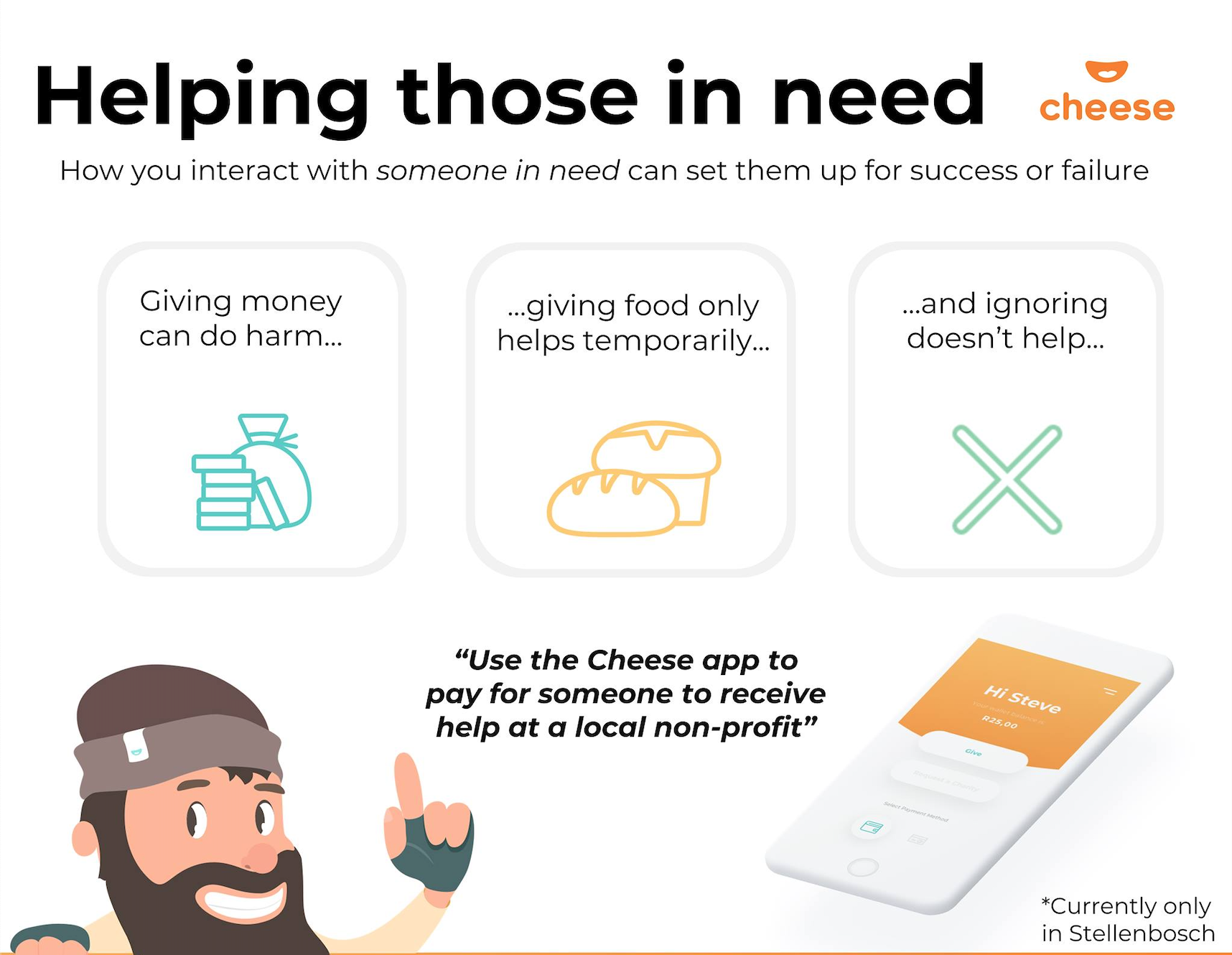
Our solution focused on streamlining services across various stakeholders to encourage homeless individuals to upskill themselves or seek appropriate assistance. Additionally, we launched a “Give Responsibly” campaign and introduced an alternative digital currency via the Cheese app, aiming to reshape the dynamics of aid provision.
Impact
Given the complex and persistent nature of homelessness, our solutions represent ongoing efforts rather than definitive fixes. The true impact lies in the lessons learned and ongoing public education initiatives, fostering responsible giving practices and long-term community engagement as we developed along with the Cheese team.